Top GitHub Repositories for AI and Agent Tooling: August 2026
August 2026's top GitHub repositories focused on agent harnesses, skills, memory layers, and document tooling — with one repo gaining 190K+ stars in four weeks.
If you spent any time on GitHub Trending in August, you probably noticed the centre of gravity had shifted again. Models took a back seat to the machinery around them: agent harnesses, skills, memory layers, gateways, and document tooling. One repository alone gained more than 190,000 stars in four weeks.
We tracked star growth, momentum, ecosystem impact, and real-world relevance to identify the 15 repositories that mattered most. Below, we break down what each project does, why it trended, and who should be paying attention.
1. deepseek-ai/deepseek-harness (~204K stars)

If August 2026 had a single headline, this was it. DeepSeek Harness, or dsh, is DeepSeek AI’s open-source agent harness, and it added roughly 191,000 stars in a single month, including more than 62,000 in one week. Built on an everything-is-a-plugin architecture powered by Cordis and released under the MIT license, the project already has over 14,000 commits and 23,000 forks. A single npx @deepseek-ai/dsh web command starts a local web UI on port 3080, helping explain its rapid adoption. The response reflects growing demand for an open harness from a frontier lab.
One important caveat: The project describes itself as a developer preview, with compatibility-breaking changes expected. Read the repository’s safety notice before running it on anything that matters.
Best For:
- Engineers who want a production-grade agent harness they can read, fork, and extend
- Teams evaluating plugin-based architectures instead of monolithic agent frameworks
- Anyone tracking how frontier labs are choosing to open up their agent infrastructure
GitHub Repository: https://github.com/deepseek-ai/deepseek-harness
2. mattpocock/skills (~242K stars)

With roughly 242,000 stars, this is the largest repository on the list by total count, while still adding about 45,000 in August. It is Matt Pocock’s working agents directory, a collection of composable agent skills distributed through Claude Code’s official plugin marketplace and the skills.sh installer. The project deliberately avoids process-owning frameworks such as GSD, BMAD, and Spec-Kit, arguing that they reduce control and make failures harder to debug. Skills are split between user-invoked commands like /grill-me and /triage, and model-invoked skills like /tdd, /code-review, and /diagnosing-bugs. More than any other repository here, it shaped how developers package and share agent behaviour in 2026.
Best For:
- Developers who want their agent aligned on requirements before it writes any code
- Teams looking for small, adaptable skills rather than an opinionated end-to-end framework
- Engineers who want to see what a well-structured skills repository looks like
GitHub Repository: https://github.com/mattpocock/skills
3. openai/codex (~121K stars)
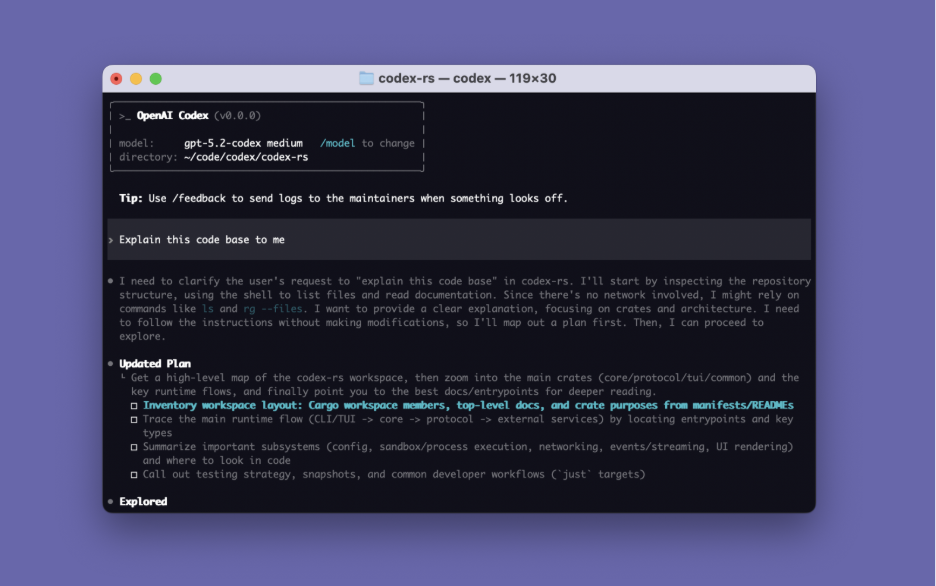
Codex is OpenAI’s lightweight coding agent for the terminal, and it added about 17,500 stars in August. On raw monthly growth alone, it would sit near the bottom half of this list, but that framing is misleading. A mature, widely deployed tool still adding five figures of stars every month is showing sustained adoption rather than a launch spike, and Codex remains the reference point that nearly every other coding agent gets benchmarked against. Several other repositories in this article ship Codex-specific plugins or installers, which is the clearest possible signal of where it sits in the ecosystem.
Best For:
- Developers who prefer a terminal-native agent over an editor-embedded one
- Teams standardising on one coding agent across a mixed toolchain
- Anyone who wants a stable baseline to compare newer agent harnesses against
GitHub Repository: https://github.com/openai/codex
4. tt-a1i/archify and cathrynlavery/diagram-design (~43K and ~29K stars)
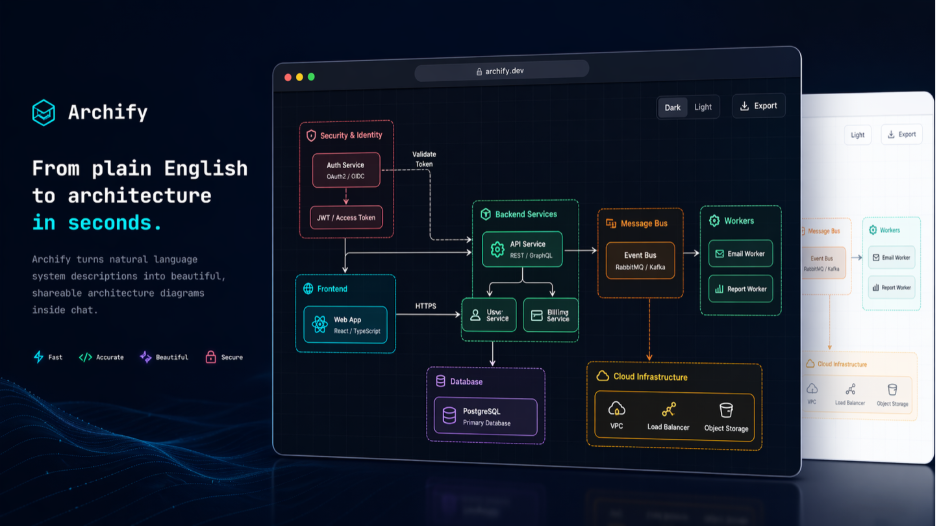
These two are counted as one entry because they are the same story. Both are agent skills that generate diagrams as self-contained HTML and SVG, both launched this year, and between them they gained roughly 56,000 stars in August — the second-strongest momentum on this list. Archify covers architecture, workflow, sequence, dataflow, and lifecycle diagrams with motion and clean export. Diagram-design ships 38 editorial diagram types for Claude Code, Codex, and Pi, and its README is refreshingly blunt about its goal: no shadows, no Mermaid slop. The pair reflects a genuine gap, since agents have been able to write code for years but have been poor at producing a diagram anyone would put in a document.
Worth keeping in perspective: Two near-identical skills trending at the same time is as much a signal of a fast-moving fashion as of durable infrastructure. Treat this as the defining trend of the month rather than a settled category.
Best For:
- Engineers who need architecture diagrams as a by-product of a design conversation
- Technical writers and educators producing explanatory visuals at speed
- Teams tired of Mermaid output that looks like Mermaid output
GitHub Repositories: https://github.com/tt-a1i/archify | https://github.com/cathrynlavery/diagram-design
5. DietrichGebert/ponytail (~120K stars)

Ponytail is the best-evidenced project on this list. It is an agent skill, MIT licensed and compatible with around 20 agent hosts, that makes a coding agent behave like a senior engineer who deletes more than they add. It works through a seven-rung ladder the agent walks before writing anything: does this need to exist, is it already in the codebase, does the standard library or the platform handle it, is there an installed dependency, can it be one line. The published benchmark runs a headless agent session against a real FastAPI and React repository across twelve feature tickets and reports 54 percent less code and 20 percent lower complexity scores compared to the same agent running without the skill — making it one of the few repositories on this list with reproducible, quantified results to back up its claims.
Best For:
- Teams concerned about agent-generated codebases growing unmanageably large
- Engineers who want a lightweight nudge toward simplicity without rewriting their entire workflow
- Anyone benchmarking the real-world impact of agent skills on code quality
GitHub Repository: https://github.com/DietrichGebert/ponytail
6. firecrawl/anydoc and firecrawl/pdf-inspector (~20K and ~9K+ stars)
Two more paired entries from the same team. Anydoc is a document ingestion layer that converts PDFs, Word files, spreadsheets, and web pages into clean structured markdown suitable for agent consumption. PDF-inspector sits one level deeper, exposing raw PDF internals — fonts, object streams, form fields, embedded metadata — for cases where clean extraction is not enough and you need to understand why a document is structured the way it is. Together they address one of the most persistent friction points in applied RAG work: getting documents into a state where a model can actually reason over them reliably.
Best For:
- Teams building RAG pipelines over messy, mixed-format document collections
- Engineers debugging extraction failures in existing document pipelines
- Anyone who needs more than a text dump from a PDF
GitHub Repositories: https://github.com/firecrawl/anydoc | https://github.com/firecrawl/pdf-inspector
7. earendil-works/pi (~101K stars)
Pi is a local-first agent runtime designed to run on edge hardware, including Raspberry Pi devices, without a persistent cloud connection. It reached 101K stars on the back of strong August momentum, driven largely by the maker and hobbyist community but increasingly adopted by teams prototyping embedded agent workflows. Pi handles model routing, tool calling, and basic memory management within a strict resource budget, and its configuration layer is deliberately minimal — a single YAML file covers most deployments. The project’s appeal is its honesty about constraints: it is not trying to compete with cloud-scale harnesses, it is trying to be the most reliable option when cloud is not available.
Best For:
- Developers building agents for offline or intermittently connected environments
- Hardware hobbyists who want a structured runtime rather than raw API calls
- Teams evaluating edge deployment before committing to cloud infrastructure
GitHub Repository: https://github.com/earendil-works/pi
8. diegosouzapw/OmniRoute (~60K stars)
OmniRoute is an LLM gateway that handles routing, load balancing, fallback, and cost tracking across multiple model providers from a single configuration file. It added roughly 60K stars in August, reflecting how quickly teams are moving from single-provider setups to multi-model architectures. The project supports OpenAI, Anthropic, Google, and a growing list of open-weight endpoints, and it exposes a unified OpenAI-compatible API surface so existing integrations require minimal changes. A built-in cost dashboard and per-route spend limits make it practical for teams managing real budgets across multiple projects.
Best For:
- Engineering teams running production workloads across more than one model provider
- Anyone who wants fallback and retry logic without writing it from scratch
- Teams that need spend visibility without integrating a separate observability tool
GitHub Repository: https://github.com/diegosouzapw/OmniRoute
9. PrimeIntellect-ai/prime-agent (~20K stars)
Prime-agent is PrimeIntellect’s open-source research agent, built for autonomous literature review, experiment tracking, and hypothesis generation. Its 20K stars understate its influence in the ML research community, where it has been adopted by several university labs as a starting point for building custom research assistants. The project integrates with ArXiv, Semantic Scholar, and local experiment logs, and it ships a structured reasoning loop that separates retrieval, synthesis, and output generation into auditable steps. The codebase is intentionally readable, with extensive inline documentation aimed at researchers rather than production engineers.
Best For:
- ML researchers who want an agent that understands the structure of academic work
- Teams building internal research assistants on top of a well-documented foundation
- Anyone who needs retrieval-augmented reasoning over scientific literature at scale
GitHub Repository: https://github.com/PrimeIntellect-ai/prime-agent
10. TencentCloud/TencentDB-Agent-Memory (~26K stars)
TencentDB-Agent-Memory is Tencent’s open-source implementation of a persistent memory layer for agents, backed by their managed database infrastructure. It gained 26K stars in August as the question of how agents should store and retrieve long-term context moved from theoretical to urgent. The project implements episodic, semantic, and procedural memory as separate stores with configurable retention policies, and it exposes a clean SDK that works alongside existing agent frameworks rather than replacing them. The Tencent Cloud dependency is real but optional for the core memory logic, making the codebase useful even for teams not running on their infrastructure.
Best For:
- Teams building agents that need to maintain context across sessions or users
- Engineers evaluating different memory architectures before committing to one
- Anyone who wants a production-tested reference implementation for agent memory
GitHub Repository: https://github.com/TencentCloud/TencentDB-Agent-Memory
Conclusion
August 2026’s GitHub Trending data tells a coherent story: the field has moved past debating which foundation model to use and is now focused on the infrastructure layered around those models. Agent harnesses, composable skills, document ingestion, multi-provider routing, and persistent memory all trended simultaneously — not as isolated curiosities, but as interconnected pieces of a maturing agent stack. The repositories above represent the clearest view available of where that stack stands today and where practitioners are investing their attention heading into the final quarter of 2026.
Frequently Asked Questions
Q: How were these repositories selected? A: Selection was based on a combination of star growth, month-on-month momentum, ecosystem impact, and real-world relevance, not total star count alone.
Q: Are all of these repositories production-ready? A: No. Several, including deepseek-harness, are explicitly labelled as developer previews. Check each repository’s own documentation and safety notices before using it in production.
Q: Do any of these require specific cloud providers? A: Most are cloud-agnostic. TencentDB-Agent-Memory has an optional Tencent Cloud dependency, and OmniRoute supports multiple providers. Pi is specifically designed for local and edge deployment.
Q: Where can I track star growth data independently? A: Tools such as Star History and OSS Insight provide historical star tracking for public GitHub repositories.