Graph Engineering: Building Reliable AI Workflows with LangGraph
Graph engineering treats AI applications as explicitly designed workflows. Learn the core components and build a reliable LangGraph research workflow.
AI-agent development has progressed through overlapping phases: prompt engineering, context engineering, tool use, autonomous loops, memory systems, and multi-agent coordination. A newer focus is graph engineering, which treats AI applications as explicitly designed workflows rather than a single autonomous agent.
Graph engineering defines how agents, tools, deterministic functions, validators, data sources, and humans coordinate to complete tasks. It is broader than LangGraph, GraphRAG, or knowledge graphs. In this article, we examine graph engineering from an implementation perspective and build a reliable LangGraph workflow.
What Is Graph Engineering?
Graph engineering is the practice of representing an AI application as an executable graph containing agents, tools, functions, policies, data systems, evaluators, and human decisions.
A practical definition is:
Graph engineering is the design of nodes, dependencies, state transitions, execution routes, validation gates, recovery paths, and control boundaries inside an agentic system.
Consider an AI system that researches a technical topic, writes a report, verifies its claims, and sends it to a client.
A single-agent implementation might look like this:
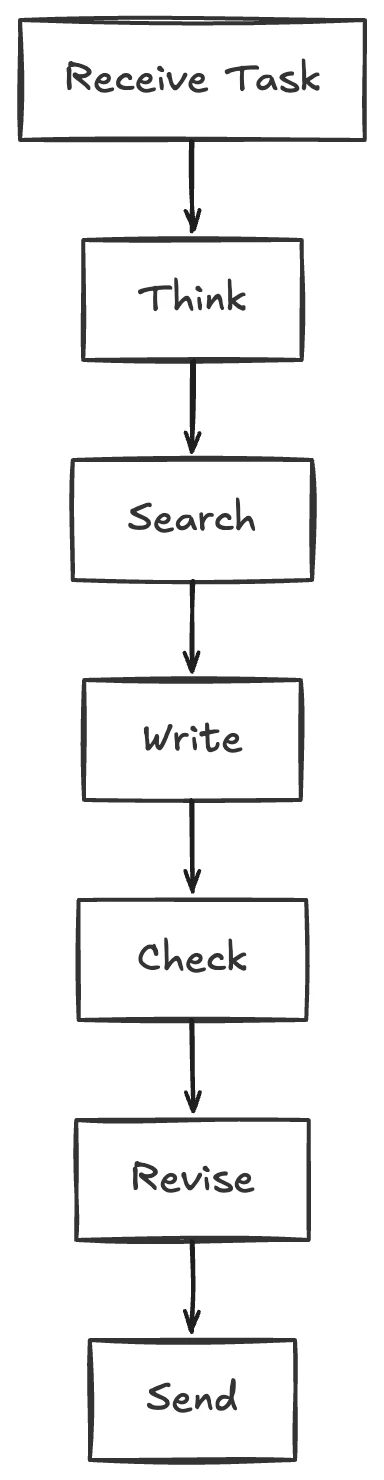
Most of those transitions are hidden inside the model’s context. The model decides when to search, when enough evidence has been collected, whether the output is correct, and when the task is complete.
A graph-engineered implementation makes those responsibilities explicit:
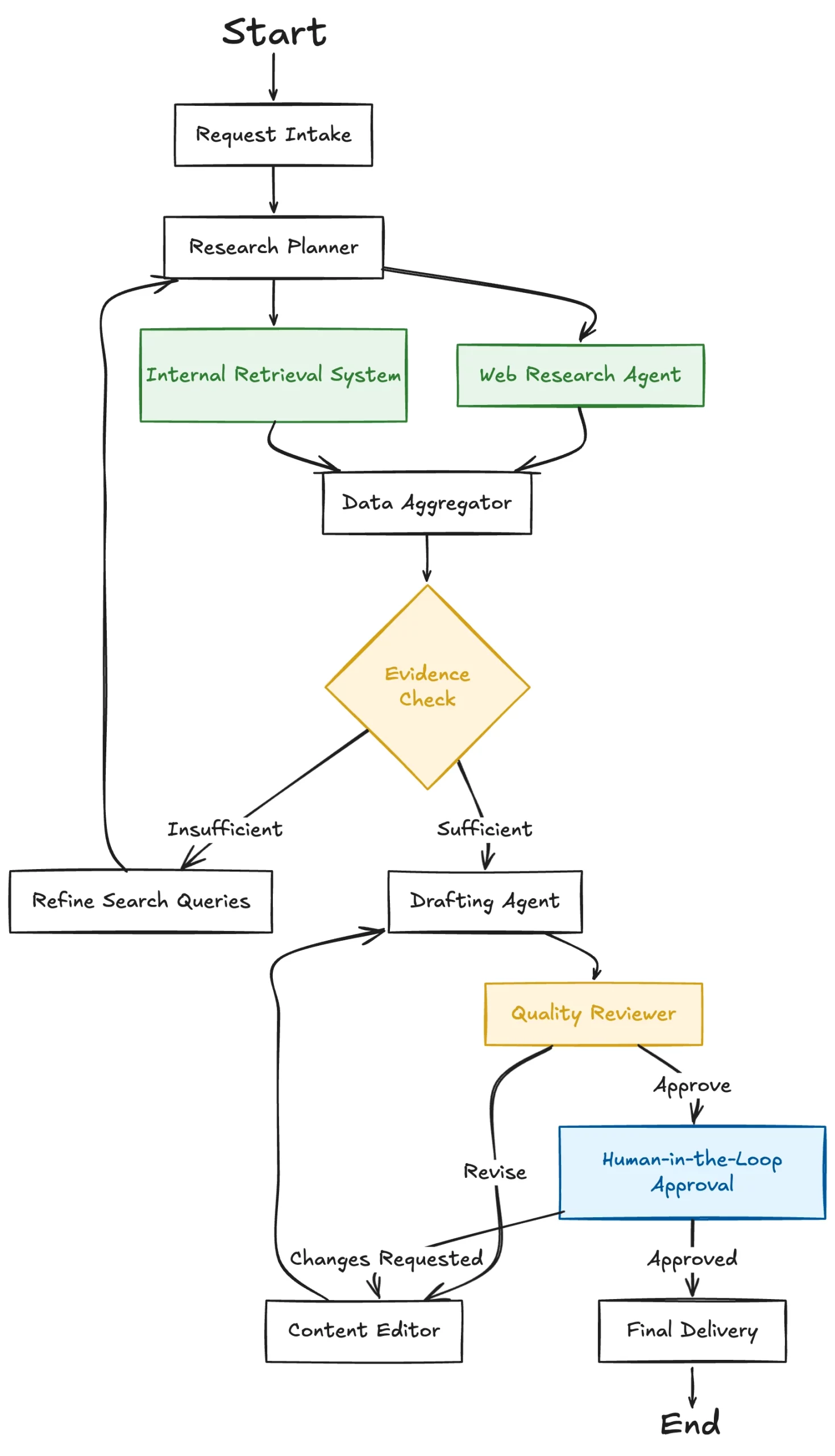
Here, the graph defines which transitions are permitted. Individual agents can still reason autonomously within their nodes, but they do not control the entire system.
Core Components of Graph Engineering
1. Nodes
A node is a bounded unit of execution.
A node may contain:
- An LLM call
- A complete tool-using agent
- A Python function
- A retrieval operation
- A database query
- An API request
- A policy check
- A test suite
- A human approval request
- A subgraph
Not every node should be an AI agent.
Known business rules should generally remain deterministic. An LLM is useful where semantic interpretation, generation, planning, or ambiguity is involved.
For example, calculating whether an invoice exceeds an approval threshold does not require an LLM. Understanding whether an email represents a refund request may require one.
2. Edges
Edges define which nodes can execute after another node.
Common edge types include:
- Direct edges
- Conditional edges
- Parallel edges
- Looping edges
- Error edges
- Human-controlled edges
- Event-triggered edges
An edge represents a dependency or control rule.
For example:
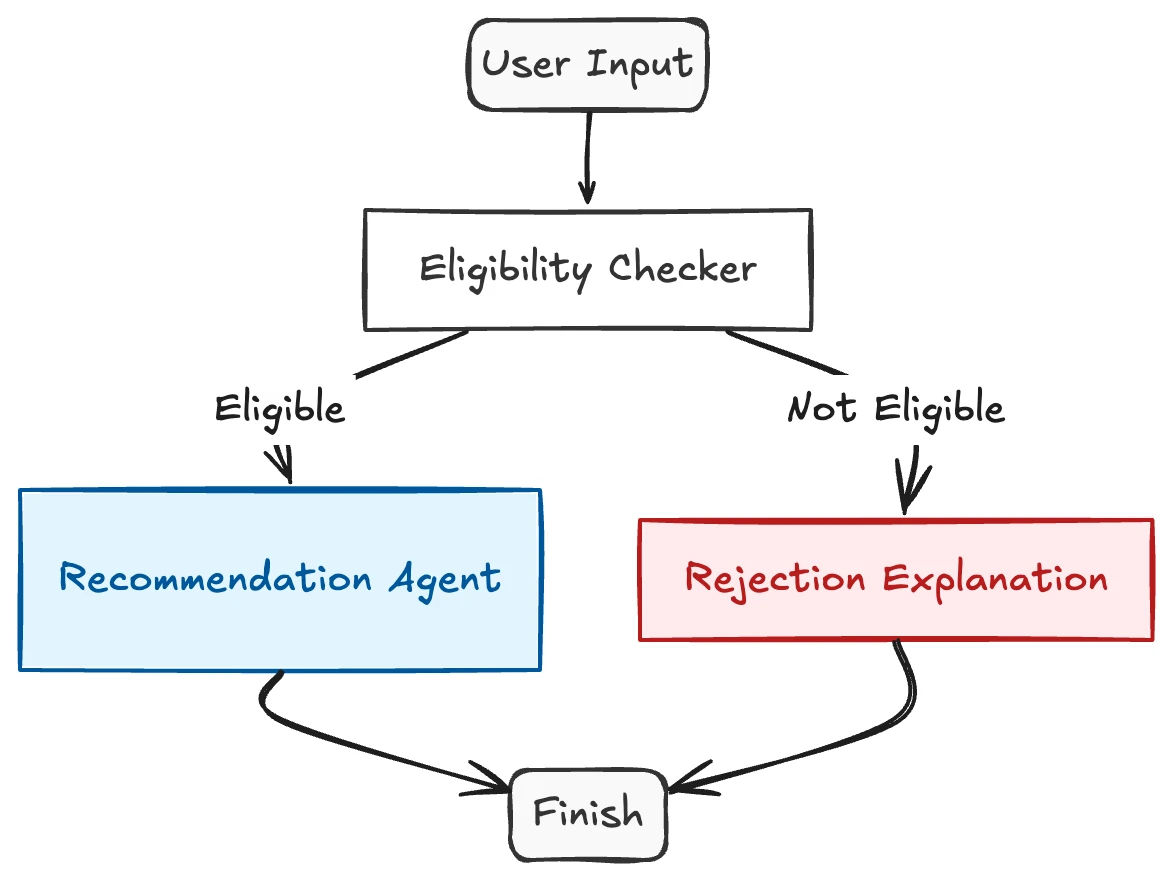
The routing condition may be implemented through deterministic Python logic or an LLM classifier.
3. State
State is the shared record carried through the graph.
It may contain:
class WorkflowState(TypedDict):
    user_request: str
    task_plan: list[str]
    retrieved_evidence: list[str]
    draft: str
    validation_result: dict
    retry_count: int
    approval_status: str
Typed state makes the inputs and outputs of nodes visible. It also reduces the need to pass a complete conversation transcript to every agent.
LangGraph uses stateful graphs to combine deterministic steps with LLM-driven steps. It also provides persistence, streaming, human-in-the-loop controls, and support for long-running execution.
4. State Reducers
Parallel nodes may update the same state field.
Suppose three research agents return evidence simultaneously:
{
    "evidence": ["Source A"]
}
{
    "evidence": ["Source B"]
}
{
    "evidence": ["Source C"]
}
The graph needs a rule for combining these updates.
A reducer may append lists, merge dictionaries, select the latest value, or apply a custom conflict-resolution policy.
Without a clear reducer, parallel updates can overwrite one another or create inconsistent state.
5. Routes and Guard Conditions
A route determines which edge should run. A guard condition checks whether a transition is allowed.
def route_after_review(state):
    if state["grounding_score"] < 0.8:
        return "research_again"

    if state["risk_level"] == "high":
        return "human_review"

    return "finalize"
Hard constraints should not be hidden inside prompts. They should be enforced in routing code whenever possible.
6. Checkpoints
A checkpoint stores a snapshot of the graph state.
Checkpoints allow a workflow to:
- Resume after interruption
- Recover from failure
- Wait for human feedback
- Inspect previous states
- Replay a workflow
- Support long-running tasks
LangGraph separates thread-level checkpoints from long-term stores. Checkpointers preserve graph state for a specific execution thread, while stores keep application data across threads.
7. Interrupts
An interrupt pauses the graph and requests external input.
Common uses include:
- Approval before sending an email
- Review before publishing content
- Confirmation before issuing a refund
- Editing generated parameters
- Providing missing information
LangGraph interrupts save the current state and allow execution to resume later using the same thread identifier. The documentation also recommends ensuring that side effects before an interrupt are idempotent.
Important Agent Graph Patterns
LangGraph and Anthropic describe several recurring orchestration patterns for agentic applications.
Prompt Chaining
Each node processes the output of the previous node.
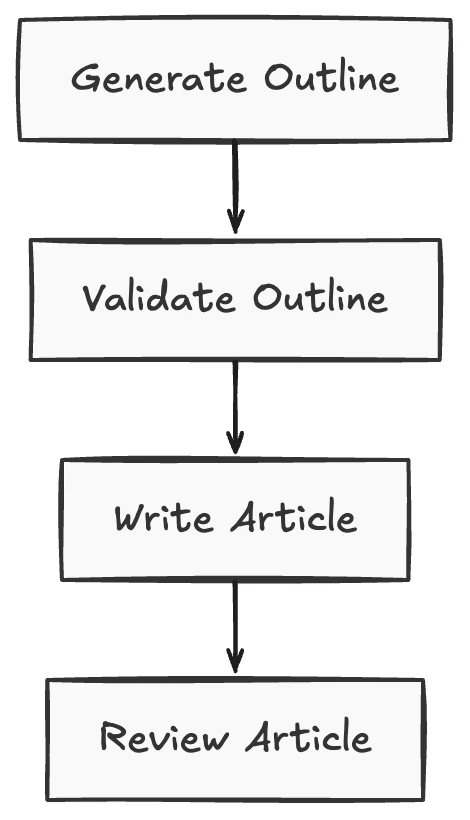
Use it when the task can be divided into fixed, verifiable stages.
Routing
A router sends the request to a specialized branch.
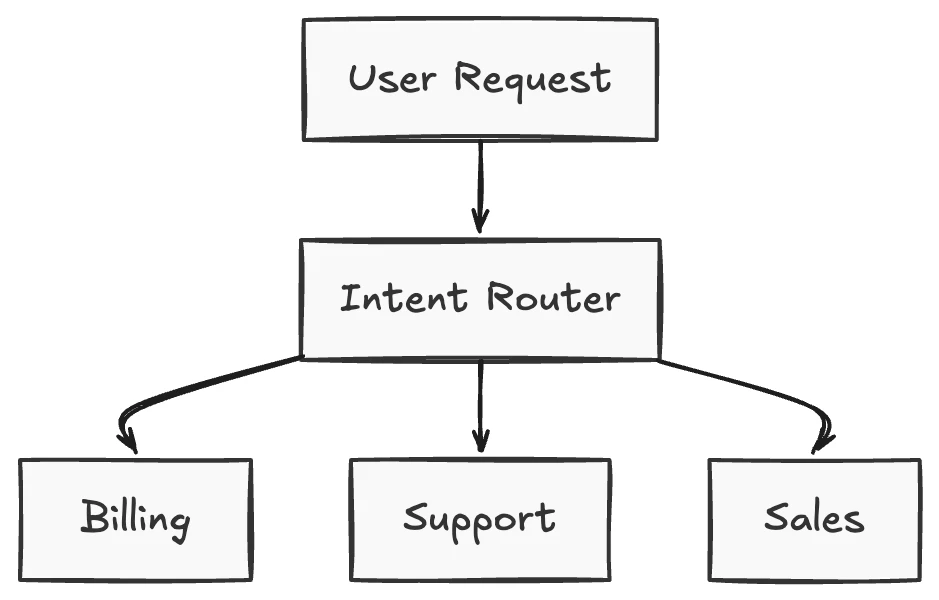
Use deterministic routing when categories are exact. Use model-based routing when classification requires semantic interpretation.
Parallelization
Independent tasks execute concurrently.
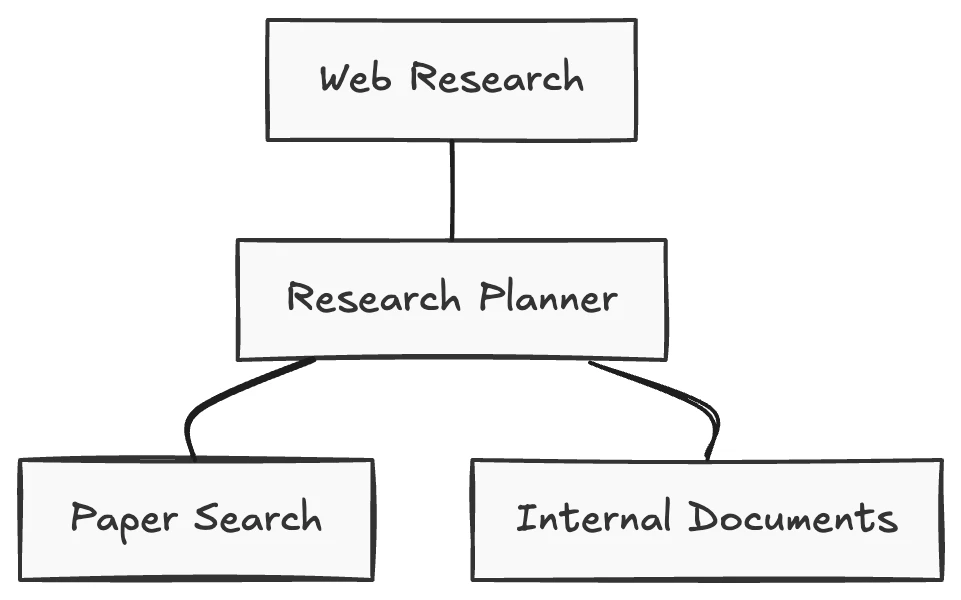
Parallelization can reduce latency and allow different agents to examine separate dimensions of a problem.
However, only independent tasks should run in parallel. Creating parallel branches that secretly depend on one another produces incomplete or inconsistent results.
Orchestrator-Worker
An orchestrator decomposes a task and delegates parts to workers.
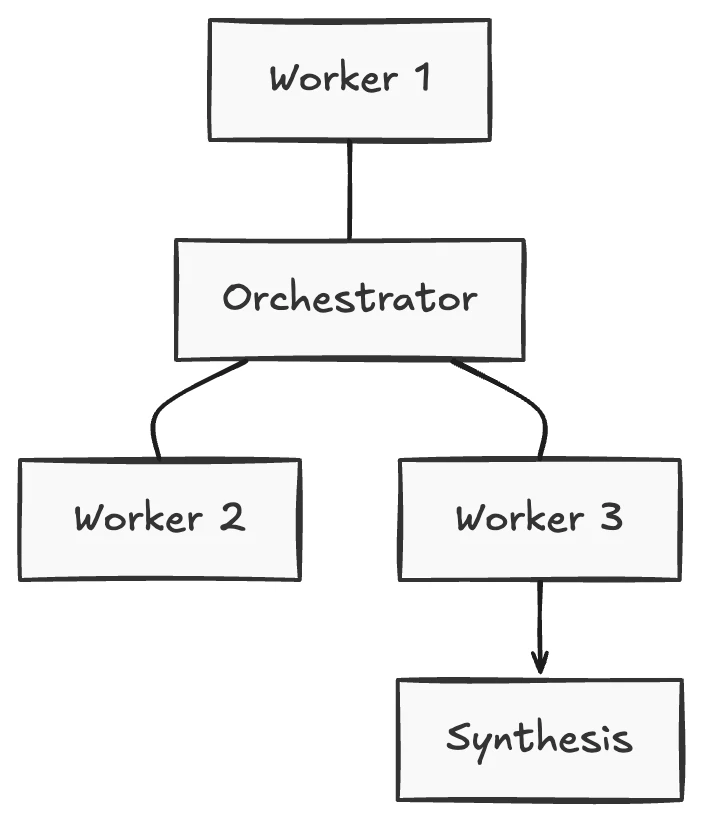
This pattern is useful when the number and type of subtasks cannot be known before the request arrives.
The orchestrator should primarily plan, assign, and integrate. If it directly performs every tool call, the architecture becomes another monolithic agent.
Evaluator-Optimizer
One component generates an artifact while another evaluates it.
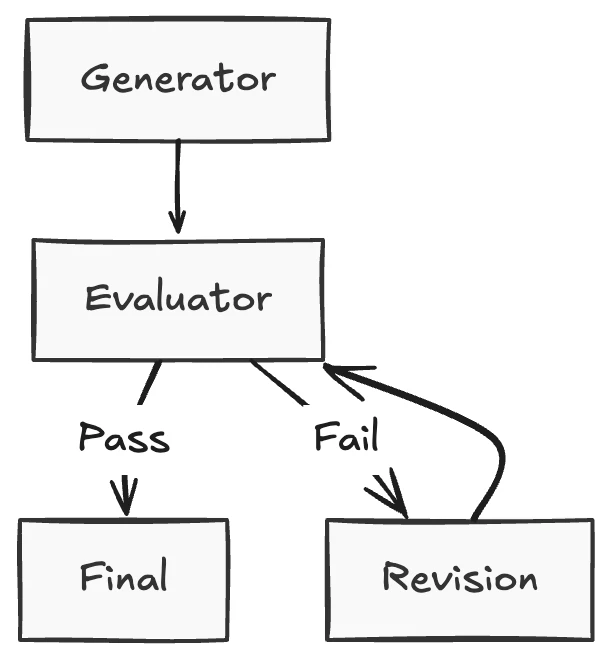
This pattern works best when the evaluation criteria are clear and revision produces measurable improvement.
Human-in-the-Loop
A human reviews the workflow before a consequential action.
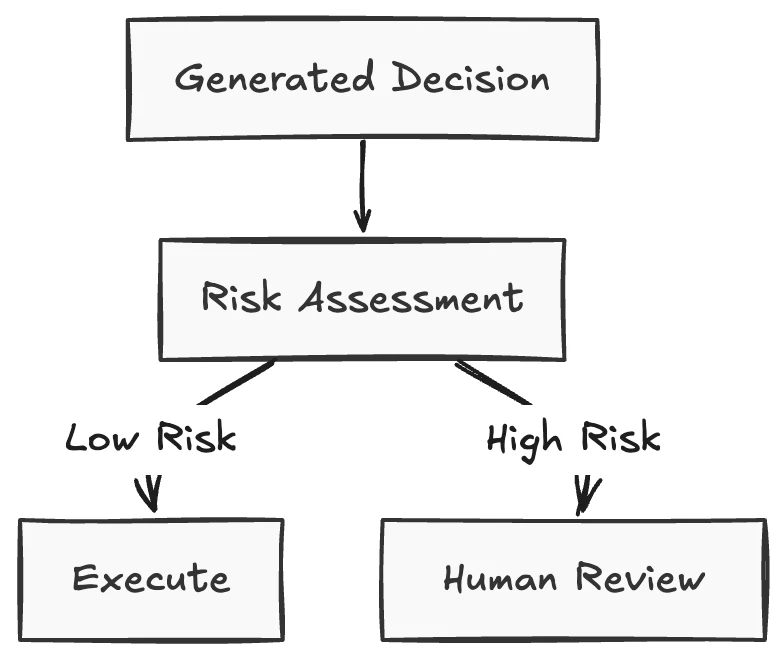
Human review should be risk-based. Requiring approval for every harmless step makes the system slow without improving safety.
Hands-On: Building a Graph-Engineered Research Workflow
We will build a graph that:
- Plans the task
- Collects evidence
- Writes a draft
- Evaluates the draft
- Revises weak drafts
- Requests human approval
- Finalizes the output
Install the Dependencies
pip install -U langgraph langchain langchain-openaiInstall the integration package for your chosen model provider separately.
Set a supported model in the environment:
model_name = "openai:gpt-4.1-mini"These seven steps map directly onto graph nodes, with conditional edges handling revision loops and the human approval interrupt. By making each stage explicit in the graph structure rather than leaving decisions to a single agent’s context, the workflow becomes auditable, resumable, and easier to debug in production.