What Claude Can Actually Draw: SVG Image Generation Explained
Claude generates vector graphics natively using SVG code — no image model required. Here's the full range, with exact prompts for each example.
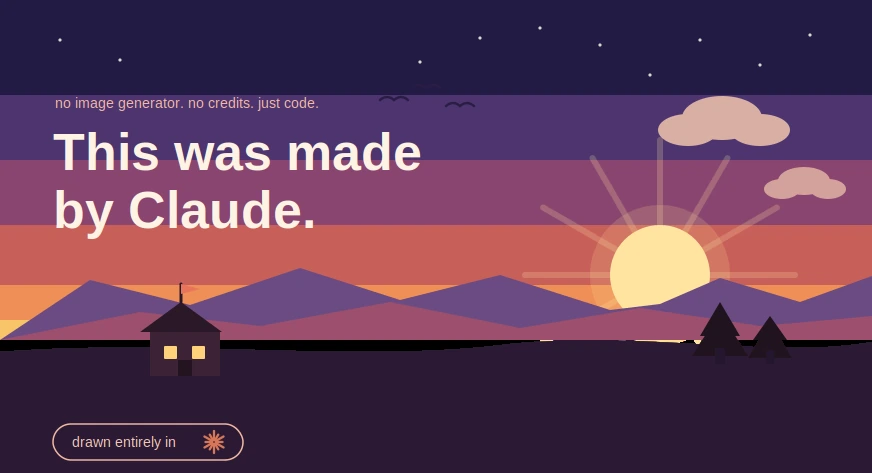
Everyone says Claude can’t make pictures. That’s partly true.
Here is the kind of art it makes on its own, with no plugins and no connectors:
 The sun’s rays turn and the clouds drift
Drawn by Claude in SVG, no image model anywhere near it. Not pixels but code: shapes and coordinates that stay sharp at any size and redraw themselves when you ask.
What follows is the full tour, with the exact prompts that made each piece, so you can see the range of Claude’s visual capabilities and try it yourself.
You have probably heard that Claude can’t make images. It is the one knock on it that never quite goes away. Open a chat, ask for a picture, and you will not get a photo back the way you would from Midjourney or the image tools baked into ChatGPT and Gemini.
That part is true, but it is also half the story. There is a whole category of visuals that Claude makes entirely on its own, with no connectors, no credits, and no signing up for some third-party tool. It draws. Not with pixels, but with code. And it carries one advantage that no image generator can match, which we will get to near the end.
Below is what that looks like, with the exact prompts that produced each piece. Everything you are about to see was drawn by Claude.
How it works, in one minute
When Claude makes a visual, it writes SVG. Instead of painting a grid of colored dots, SVG describes a picture as shapes and coordinates: a circle here, a line there, this color, that angle. It is a recipe for a drawing rather than a photograph of one.
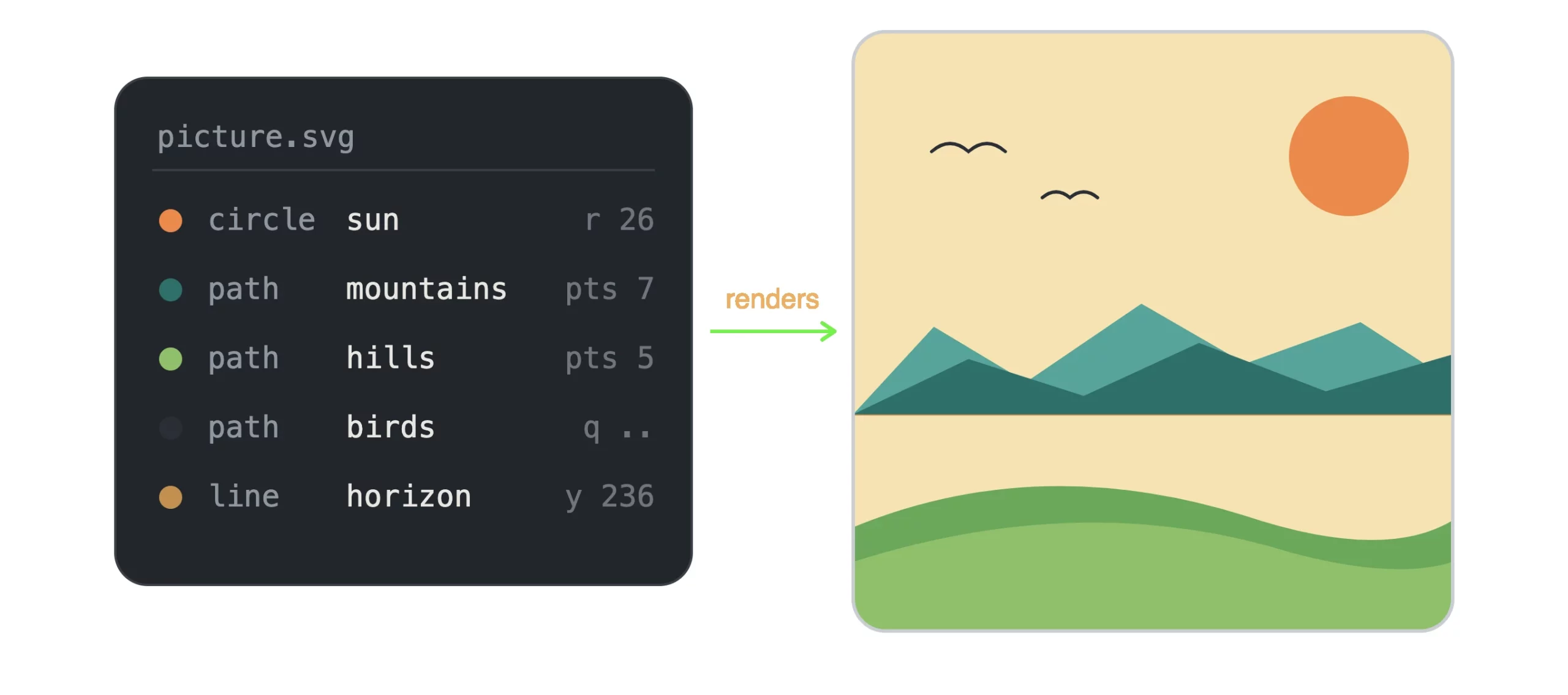 Change the words, change the picture
Two useful things fall out of that. First, the art stays razor sharp at any size, because the shapes are recomputed instead of stretched. Second, and this is the part that matters most, you can change the picture by changing the words — which is the trick we will come back to.
The trade is honest: this is flat, graphic, vector-style work. Think logos, icons, diagrams, and editorial illustration, not photorealistic skin or painterly texture. Within that lane, though, the range is wider than most people expect.
The range (hands-on)
Here are five pieces, each made from a single plain-English request. The prompt sits under each one so you can try it yourself.
1. Single-weight line art

Draw a potted plant as minimalist single-weight line art. Black strokes only, no fill, rounded ends.
Pure outline, even line weight. The kind of thing that sits nicely at the top of a blog post or as a quiet section break.
2. Isometric, three-face shading

Make an isometric little house. Three shaded faces, warm windows, a small flag on top.
Isometric work is all angles and consistent shading, which is exactly the sort of math code is good at. Useful for product explainers and how-it-works graphics.
3. An icon set in one consistent style
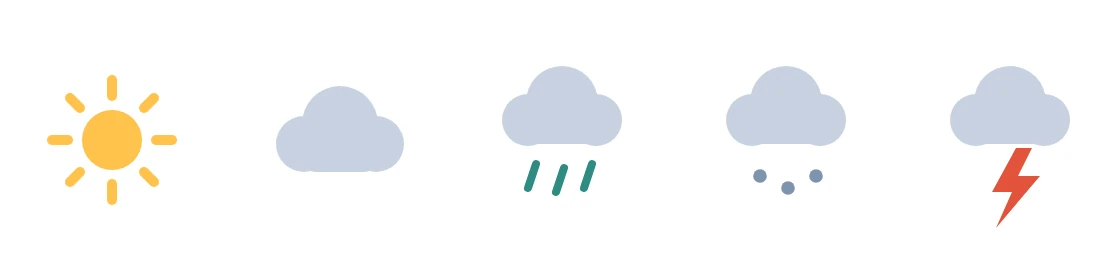
Give me a flat weather icon set: sun, cloud, rain, snow, lightning. Keep one consistent style.
The win here is consistency. Ask for a set and you get shapes that share the same weight and spacing, which is the hard part to keep steady by hand.
4. A small data panel
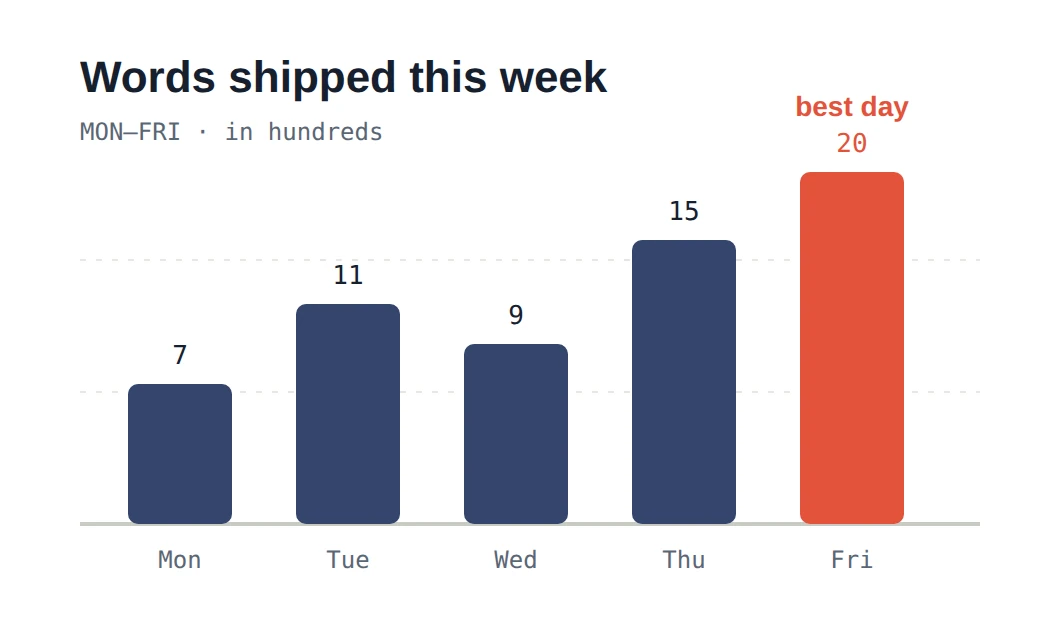
Turn this into a clean bar chart: Mon 7, Tue 11, Wed 9, Thu 15, Fri 20. Highlight the best day.
Hand Claude numbers and it will lay out a chart with labels, a baseline, and a highlighted bar. Good for reports and slides where you want one tidy figure rather than a spreadsheet.
5. A flat character illustration

Draw a cute sitting fox in flat illustration style, warm palette, simple shapes.
Characters land too, as long as you keep them flat and graphic. This is where “vector” starts to feel like proper illustration rather than clip art.
The trick no image generator has
Here is the part worth the price of admission. With a normal image generator, a small change means rolling the dice again and hoping the next render keeps everything you liked. With Claude’s drawings, you just say what to change, and it edits the picture you already have.
Watch a plain mug pick up a few requests, one sentence at a time.


Starting image on the left. After 3 edits on the right.
- Make it coral instead
- Add steam rising off the top
- Give it polka dots and a little saucer
Three sentences, three edits, and the mug never lost its shape between steps. Try doing that cleanly with a text-to-image model.
This is the real reason to care. Claude does not just hand you a picture — it hands you a picture you can keep steering. The conversation is with the editor, not just the generator.
How to get good results
The difference between a flat result and something you would publish usually comes down to how you ask. A few habits that help:
- Name the style: Say the words out loud: “flat vector,” “single-line art,” “isometric,” “editorial spot illustration.” Claude leans into a named look far better than a vague one.
- Set the mood: Give it a palette and a feeling. “Warm dusk colors, calm” beats “make it nice” every time.
- Ask for SVG: Request it as an SVG so you get the sharp, editable version rather than a one-off.
- Edit small: Change one thing per turn. Stacking five changes at once often loses one of them — sequential edits land more reliably.
Where it shines, where it doesn’t
Claude’s SVG output works well for icons and UI assets, data visualizations and simple charts, editorial spot illustrations, isometric diagrams, and character work in a flat graphic style.
It is not the right tool for photorealistic imagery, complex painterly scenes, or anything that depends on texture and fine detail at the pixel level. For those tasks, a dedicated image model is still the better choice.
The takeaway
Claude’s visual output is narrower than a full image generator but more controllable. You get crisp, scalable graphics that you can refine through conversation rather than re-rolling from scratch. For anyone who works with icons, diagrams, or lightweight illustrations, that combination of precision and editability makes it a genuinely practical tool — not just a curiosity.
Frequently Asked Questions
Q: Does Claude need any external tools or plugins to generate images? No. Claude generates SVG graphics natively through code, with no third-party connectors or image models required.
Q: What file format does Claude use for its drawings? Claude writes SVG (Scalable Vector Graphics), which describes images as shapes and coordinates rather than pixels.
Q: Can I edit an image Claude has already made? Yes. Because the output is code, you can ask Claude to change specific elements — color, shape, details — and it will update the existing image rather than generating a new one from scratch.
Q: What kinds of visuals is Claude best suited for? Icons, data charts, isometric diagrams, flat character illustrations, and editorial spot art. It is not designed for photorealistic or painterly imagery.
Q: How do I get the sharpest, most editable output? Explicitly ask for the result as an SVG file. This gives you a scalable, editable version rather than a rendered one-off.